LEARN & SENTRO Joint Statement on International Labor Day 2026
Going beyond the tired, ritualistic calls for worker’s action, a serious engagement with the history of May Day can be an inspiration for working class mobilization against the threats of our time.
An Unraveling Decades in the Making
“There are decades where nothing happens, and weeks where decades happen” is a widely used quote attributed to a certain (in)famous Russian revolutionary from the 20th century. In many ways, this statement captures the political upheaval of our time.
Liberal multilateralism, as expressed by the United Nations System and the institutions of economic globalization such as the IMF and WTO, is now facing a serious, even existential threat. Decades of inequality and the disconnect between the promise and fruits of neoliberalism has bred widespread resentment at the current international order. Viewed this way, Trump’s illiberalism, inconsistency, and disregard for the United States’ historic role in propping up multilateralism is both familiar and exceptional — it is a clear sign of the system breaking down. A few months ago it was Venezuela, now it is Iran. Who knows where the next flash point will be.
The consequences of neoliberalism’s decline are not just symbolic or abstract. As the current global oil crisis shows, it is both deadly and direct.
Organized Labor as a Bedrock of International Solidarity
Despite their obvious shortcomings, simply doing away with the institutions of global multilateralism will do more harm than good. The current surge of right wing, nationalist, and nativist forces threatens to throw humanity back into the chaos of great power competition abroad and unchecked exploitation at home. Trump’s “might makes right” attitude to Venezuela, Cuba, and Iran does not bode well for Ukraine, Taiwan, and Palestine too.
A retreat from internationalism will mean a retreat (symbolically at least) for the cause of human rights, global solidarity, and shared standards of accountability. This will mean the rise and rule of monsters supervising genocide abroad, division and oppression at home.
As social movements, trade unions, and other progressive forces struggle to chart a path forward, a serious, forward-looking engagement with our history might provide the necessary political inspiration. Here, the experiences and memory of the international labor movement could prove instructive. With a long (albeit inconsistent) history of confronting capital, the traditions and history of organized labor is infused with the commitment to international solidarity and universal human rights.
Going Beyond Political Theatre
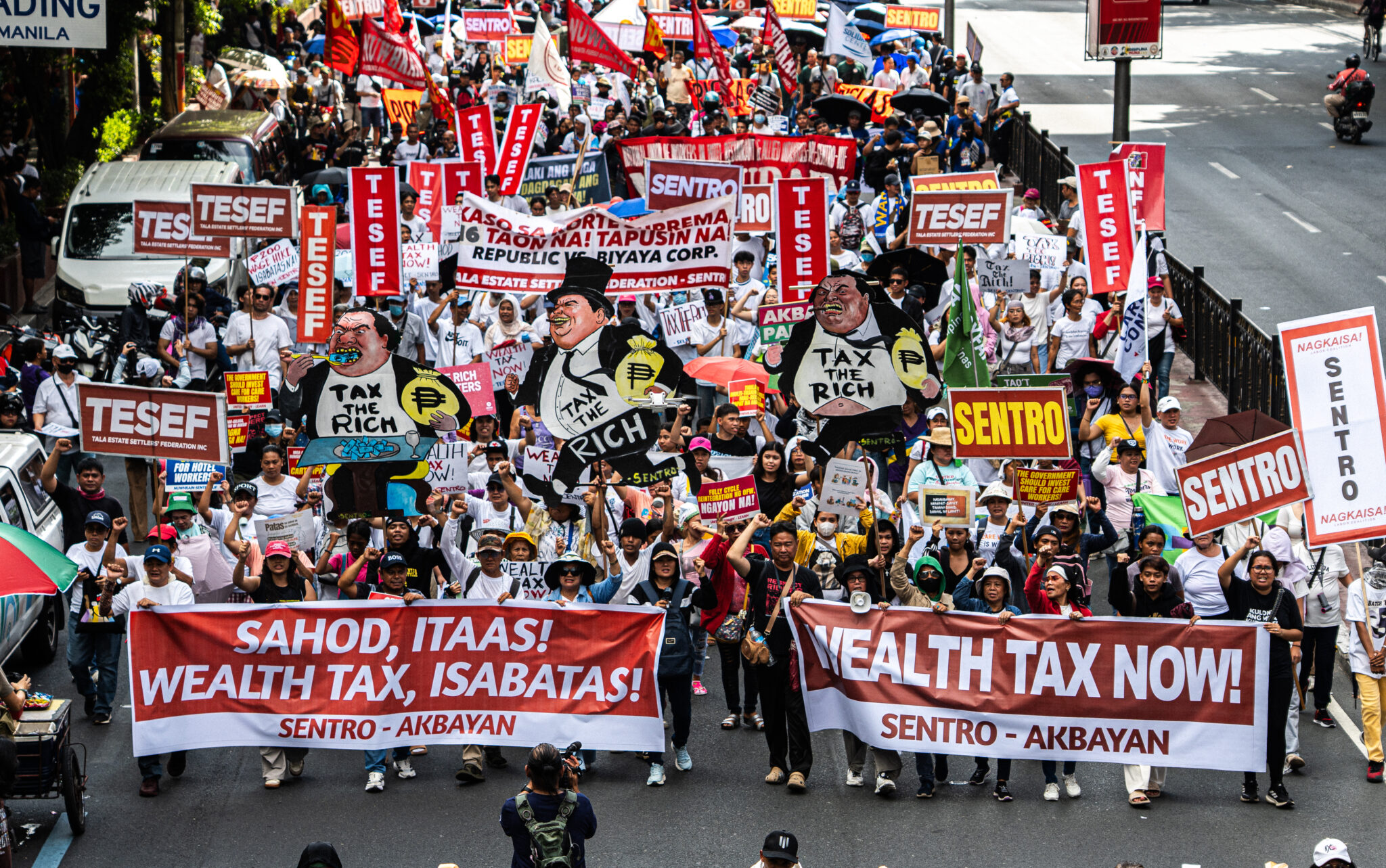
It is time for those that believe in the cause of human rights and international solidarity to confront the present crises head on. Beyond the annual political theatre, International Labor Day remains charged with the memory of struggle. This struggle is for both international solidarity among workers and the assertion that another system, another world even, is possible. It is time that we take its disruptive character seriously. Too often our mobilizations end up as symbolic condemnations — devoid of any clear political strategy or serious consequence for the ruling powers.
In the Philippines, our contribution to international solidarity demands that we confront the structural roots of oppression. We do this with the full knowledge that what we are facing at home is part of a system with a global political and economic logic. As we take to the streets this May Day, we are demanding systemic solutions to our systemic problems.
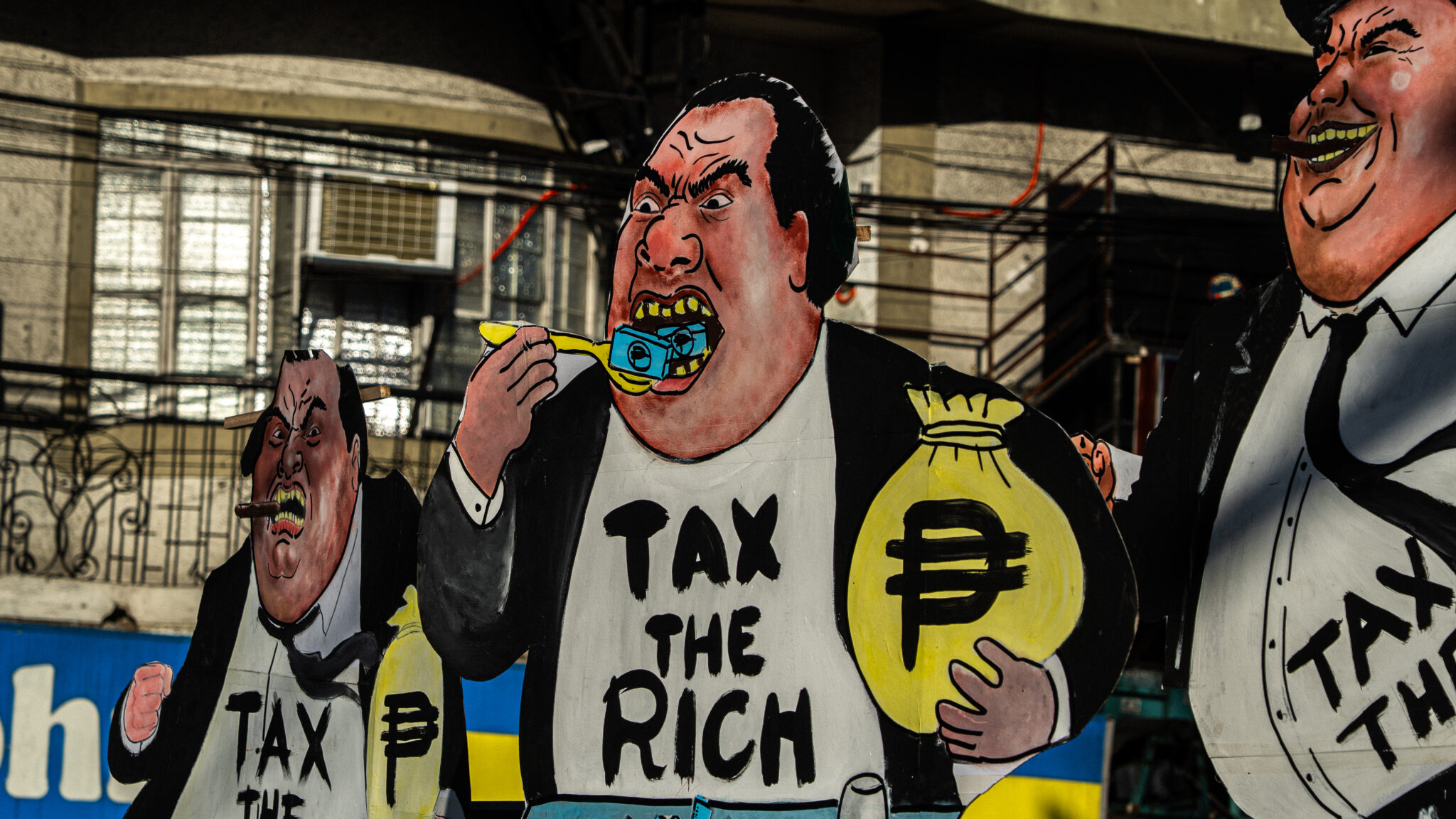
Such a response must necessarily incorporate workers longstanding demands for a wage hike and a wealth tax. The wage hike is an important step towards correcting the Philippine development strategy centered on wage suppression to attract foreign investment. The wealth tax will help correct the country’s seriously regressive tax system — as with other places where neoliberal policies have taken effect, the middle and working classes shoulder the bulk of taxes while the ultra rich are able to escape their social obligation. The added revenue will also boost the capacity of the Philippine state to fund public programs, services, and eventually, serious plans for strategic economic sectors and industries.
To LEARN and SENTRO, it is clear that these demands are not just for the material interests of Filipino workers. It is part of the global struggle to roll back decades of privatization, commodification, and exploitation under neoliberal globalization.
