
Trump’s Electoral Defeat Is A Victory For Democratic Resistance, But The Struggle Is Far From Over
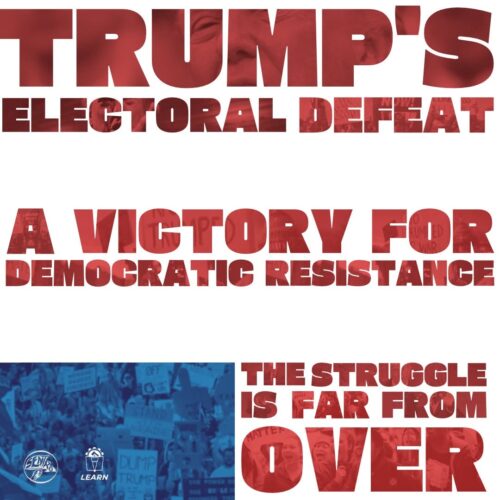
The defeat of Donald Trump and the Republican Party in the US midterm elections is a significant victory for democratic resistance and a powerful rebuke to an administration whose policies have deepened economic insecurity, widened social divisions, attacked fundamental rights, and undermined democratic institutions.
We salute the millions of working-class Americans, young people, women, and marginalized communities who made their voices heard at the ballot box, especially the African American and Latino communities. Their votes reflect growing frustration with an administration that has failed to address the economic hardships of ordinary people while advancing policies that disproportionately benefit the wealthy and powerful.
This electoral outcome demonstrates that working people are not powerless in the face of authoritarian tendencies, political intimidation, and attacks on their rights. When people organize, mobilize, and assert their collective political power, they can hold even the most powerful political leaders accountable.
But this victory must not become an occasion for complacency.
Trump remains in office, and an electoral defeat does not automatically dismantle the political, economic, and institutional structures that enabled his rise. The incoming congressional majority must use its mandate to investigate abuses of power, hold the administration accountable, restore democratic checks and balances, and roll back the regressive policies imposed under Trump’s presidency.
This means reversing attacks on workers’ rights and social protections, restoring environmental safeguards, defending migrants and marginalized communities, protecting reproductive and civil rights, and challenging policies that concentrate wealth and power in the hands of corporations and billionaires. It also means confronting the influence of money and corporate interests in American politics.
We must also recognize that the implications of this election extend beyond the United States, but that its impact on the Global South should not be overstated.
Trump’s defeat weakens his political mandate and may constrain some of his administration’s most aggressive initiatives. However, it does not automatically signal a fundamental change in US foreign policy or its relations with developing countries. The bipartisan foundations of American economic and geopolitical dominance, including its unequal trade relations, military interventions, and pursuit of strategic interests abroad, remain largely intact.
For the peoples of the Global South, therefore, we should welcome this setback to Trump’s political project without placing our hopes for a more just international order on changes in Washington alone. Our struggle for economic sovereignty, decent work, social justice, climate justice, and a genuinely democratic international order must continue independently of who occupies the White House or controls Congress.
Ultimately, the most important lesson of this election is that electoral victories must be translated into substantive political and economic change. The working people who helped deliver this rebuke must remain organized, vigilant, and demanding. They must hold the incoming congressional majority accountable as firmly as they have held Trump accountable.
The defeat of Trump is not the end of the struggle. It is an opportunity to advance it.
