
History is filled with struggles, wars, and revolts against poverty, oppression, and for national liberation, even social revolution. In many of these battles the organized working classes have played a pivotal role in pushing for democracy and wealth redistribution. Because of our bias for justice, fairness, and popular power, we Filipino workers found ourselves part of the 1986 revolution that toppled a dictatorship and restored our formal democratic institutions.
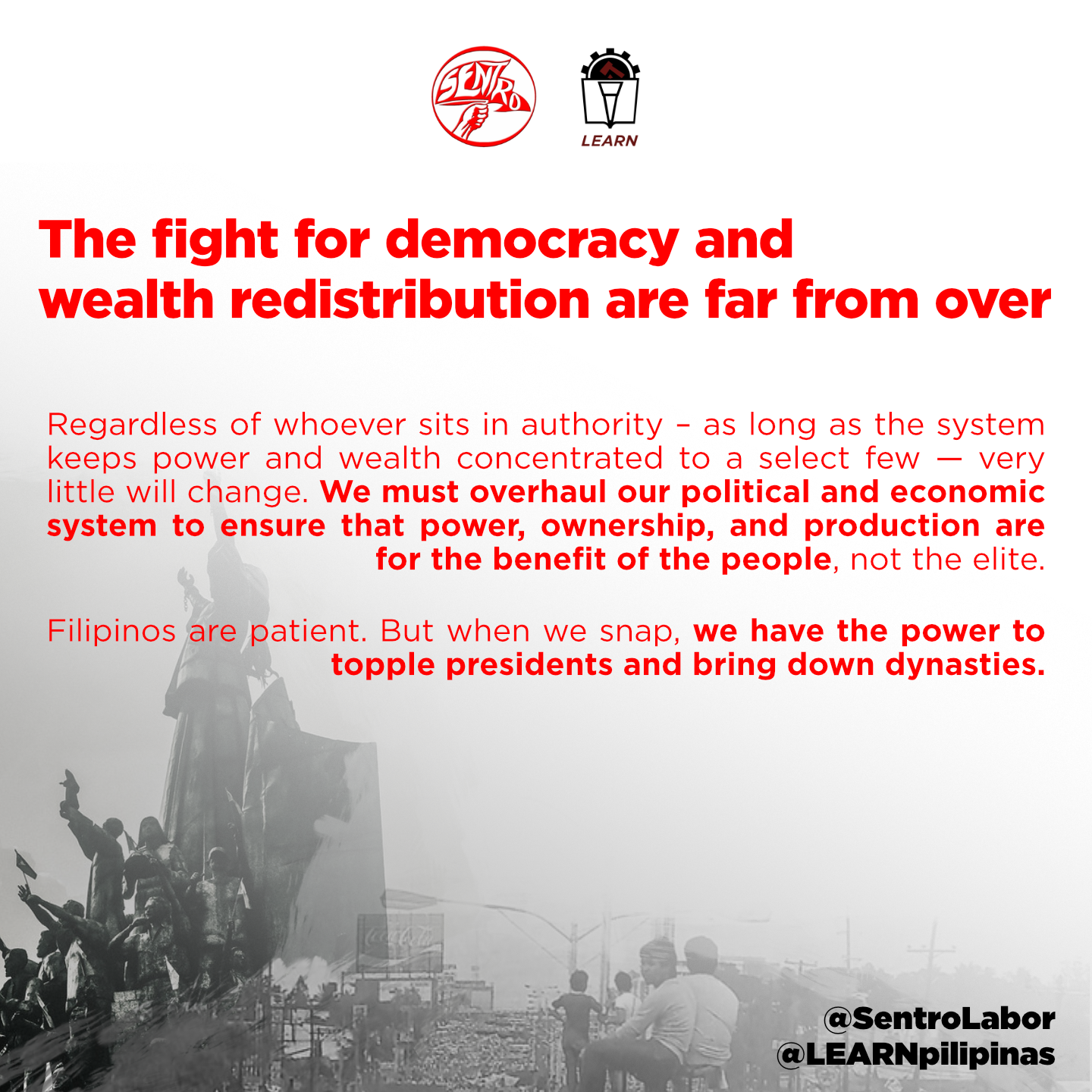
40 years since, it is clear that the fight for democracy and wealth redistribution are far from over. As we commemorate the 40th anniversary of the EDSA People Power Revolution, the Sentro ng mga Nagkakaisa at Progresibong Manggagawa (SENTRO) and Labor Education and Research Network (LEARN) calls for us to draw courage from a simple fact of history — Filipinos are patient. But when we snap, we have the power to topple presidents and bring down dynasties.
For two decades, Ferdinand Marcos Sr. and his cronies abused and stole from the people. Yet, his reign could not last forever. Years of organized opposition and the people’s frustration eventually exploded into a popular revolt that gave way to our current democratic order. Yet, the years after 1986 showed both the great lengths and limits of our people’s patience.
Using the excuse of “De-Marcosification” the ruling elites embraced a policy of rampant privatization and the embrace of transnational and multinational corporations. At the same time, political dynasties — both pro and anti-Marcos — tightened their grip over the Philippine archipelago. As a result, Filipinos saw little improvement in our quality of life. Poverty, unemployment, inhumane working conditions, contractualization, unlivable wages, bootlicking of foreigners, failing industries, harassment of organized workers and government critics, and the killings of any who dare speak against the powers that be — these continued to be the state of the nation, even decades under democracy.
With little difference under dictatorship or democracy, it is unsurprising that in a single lifetime we saw two EDSA revolutions (or three, depending on who’s counting), the presidency of the murderous Duterte, and the election of another Ferdinand Marcos as president.
40 years after EDSA, the lesson is clear. Regardless of whoever sits in authority – as long as the system keeps power and wealth concentrated to a select few — very little will change. We must overhaul our political and economic system to ensure that power, ownership, and production are for the benefit of the people, not the elite.
The massive protests during the height of the 2025 flood control scandal shows us that the people’s patience is once again running thin. Whether the movement against corruption will grow into a political force against the system will depend on many of the forces and people commemorating the EDSA revolution today. To ensure that the people’s rage and frustration can feed a politics of transformation, SENTRO and LEARN echo the following political demands:
The end to all political dynasties, so that power can no longer be accumulated by any single family against the detriment of the nation;
The end to corruption in government, through punishment of the corrupt and the assurance that no official could ever steal from public coffers;
The redistribution of wealth, through living wages, the full protection of workers, and the people’s enjoyment of quality public services such as healthcare, accessible education, and affordable housing.
40 years after EDSA I, the struggle for liberation against the ruling elites continues. Let those that profit from the people’s poverty and oppression remember that Filipinos are extremely patient. But that patience has limits.